 Roosta
The night before
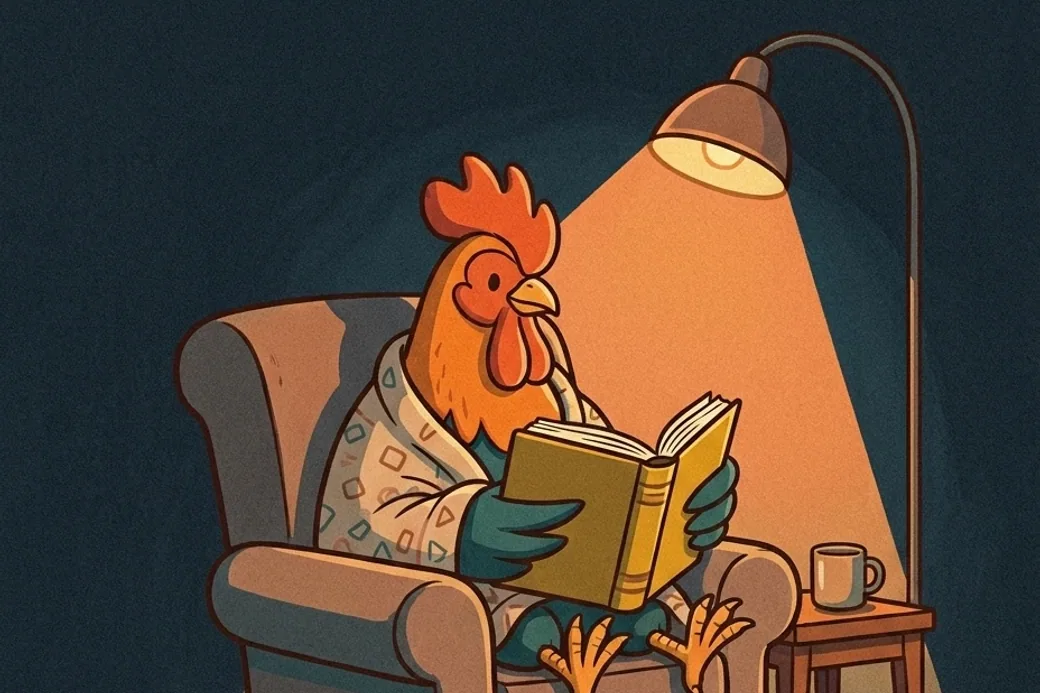
At eleven at night you know exactly what tomorrow needs. You know what time you have to leave, what you are wearing, what the first hour is for, and that going to bed now is the correct decision. You are, briefly, an extremely reasonable person.
At six in the morning you will believe almost anything, and every single one of those decisions is up for renegotiation with someone who is not qualified to have the conversation.
The whole trick is to close as many of them as possible while the reasonable one is still on duty.
Close the decisions, do not just plan them
There is a real difference between deciding what you will wear and putting it out. Between planning to go for a run and having the shoes by the door. A plan is something morning-you can reopen. A thing already done is not.
So the test for anything on tonight’s list is: does this remove a decision, or does it only pre-write one? Only the first kind survives contact with six in the morning.
The list
- Clothes out, in the order you put them on. Dressing should be a sequence, not a search. This is the single highest-return item and it takes ninety seconds.
- Whatever the morning needs, by the door. Bag packed, keys on top, shoes underneath. Anything you would have to look for is a place the morning can stall.
- Breakfast decided, ideally started. Not an elaborate preparation — knowing what it is, and that the thing it requires is in the house.
- The first task named. Not "do some work". The actual first thing, specific enough to start without thinking. See the first ten minutes.
- The alarm set, and the mission with it. The what, not just the when.
- The phone out of the bedroom, or at least out of reach. It is the single most reliable way to lose the hour before sleep — there is a whole article on that one.
If you do two of these, do the clothes and the phone. One removes the morning’s longest stall, the other protects the sleep you are about to take.
Set the bedtime like it is an appointment
Everybody sets a wake time. Almost nobody sets a bedtime, which is strange, because the wake time is entirely determined by it and only one of the two is actually under your control at the moment it arrives.
Work it backwards: the time you need to be up, minus the sleep you actually need, minus twenty minutes to fall asleep. That is a real time, on the clock, and it is the one worth defending. What time should you wake up walks through the arithmetic.
Make the morning’s terms unnegotiable
The last and most important one, and the one no amount of laying out clothes covers: whatever you have decided about getting up has to be something morning-you cannot undo.
An alarm you can retime at six is not a decision, it is a suggestion. A run you can skip at six is a run you will skip at six roughly as often as it is raining. If it can be renegotiated, it will be, and by someone who has been awake for four seconds.
This is the shape Roosta is built around. You choose the mission at eleven; it is the only thing that will stop the alarm at six. There is no snooze and no skip, and inside the hours before your target the alarm and its settings freeze, so the plan the reasonable version of you made is still standing when the unreasonable one arrives. That is not discipline. It is scheduling.