 Roosta
The five stages of hitting snooze
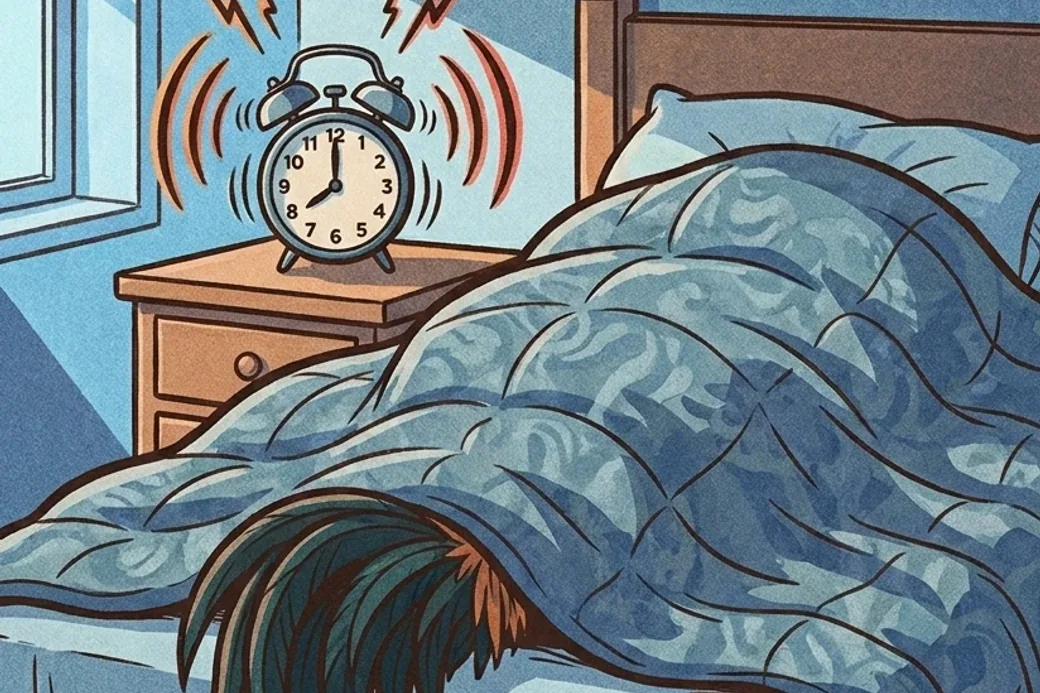
It is the same twenty minutes every time, in the same order, and it happens to people who are otherwise extremely competent. Here it is written down, because a thing you can see the shape of is easier to get out of than a thing that just happens to you.
Stage one: denial
The alarm is a fact about the world and you are simply not going to engage with it. There is no thought here. A hand goes out, something gets pressed, and the room is quiet again. If asked later, you will genuinely not remember doing it.
This is the most important stage to understand, because *nobody makes a decision in it*. Every strategy that assumes a person weighing options has already failed by this point. What defeats stage one is not resolve, it is that pressing the thing did not work.
Stage two: bargaining
Now there is thinking, and it is superb. You do not need to wash your hair. Breakfast is optional. The train after the one you planned still technically arrives before the meeting. Nine minutes is recovered from somewhere in the morning, and — this is the elegant part — you will make it up by being unusually efficient.
The arithmetic is always correct and the conclusion is always wrong, because it does not account for doing the same arithmetic again in nine minutes.
Stage three: anger
Aimed at the alarm, at whoever scheduled the thing you have to be at, and at last night, who did this to you and is not here to answer for it. Brief, and it is the only stage with any energy in it — which is why the people who do get up sometimes get up in the middle of it.
Stage four: the deal
One more. Definitely the last one. And tonight you will go to bed early, and tomorrow you will get up on the first alarm, and this will be an isolated incident.
You have made this deal before. You will make it again tomorrow. It is not a lie exactly — you mean it — it is just that the person making it will not be the person who has to keep it, and they have never once been consulted.
Stage five: acceptance, at 7:42
Not a decision either. Something external finally exceeds the cost of staying — a noise, a bladder, a genuine deadline — and you are up, forty minutes down, with a morning that now has to be done at speed. The tiredness you were trying to fix is worse than it was at the first alarm, because you spent the last stretch of your night in the shallowest sleep available and restarted the fog four times.
What the five stages are actually telling you
Read them back and there is one thing they have in common: at no point does a competent person weigh a decision and get it wrong. Stage one is unconscious. Stages two and four are a tired brain arguing brilliantly for the outcome it already wants. Stage five is not chosen at all.
So the fix is not to try harder in the morning, because there is nobody in there to try. The fix is to have made the decision the night before and to have removed the button that undoes it — which is what a commitment device is, and why "just put the phone across the room" only ever buys you the walk.
A useful test for any wake-up strategy: which of the five stages does it survive? Most survive three and four. Almost none survive stage one, because stage one does not involve you.
Skipping to the end
Roosta is an alarm with no stage one available: there is no snooze, no skip, and no button that means "trust me". It stops when you finish the mission you chose the night before — push-ups counted by the camera, a photograph of the bed you just made, sums read out loud — and a mission cannot be done by a hand reaching out of a duvet.
The physiology behind stage five is in why the snooze button makes you more tired, and if you have already tried the usual fixes, this one is for you.